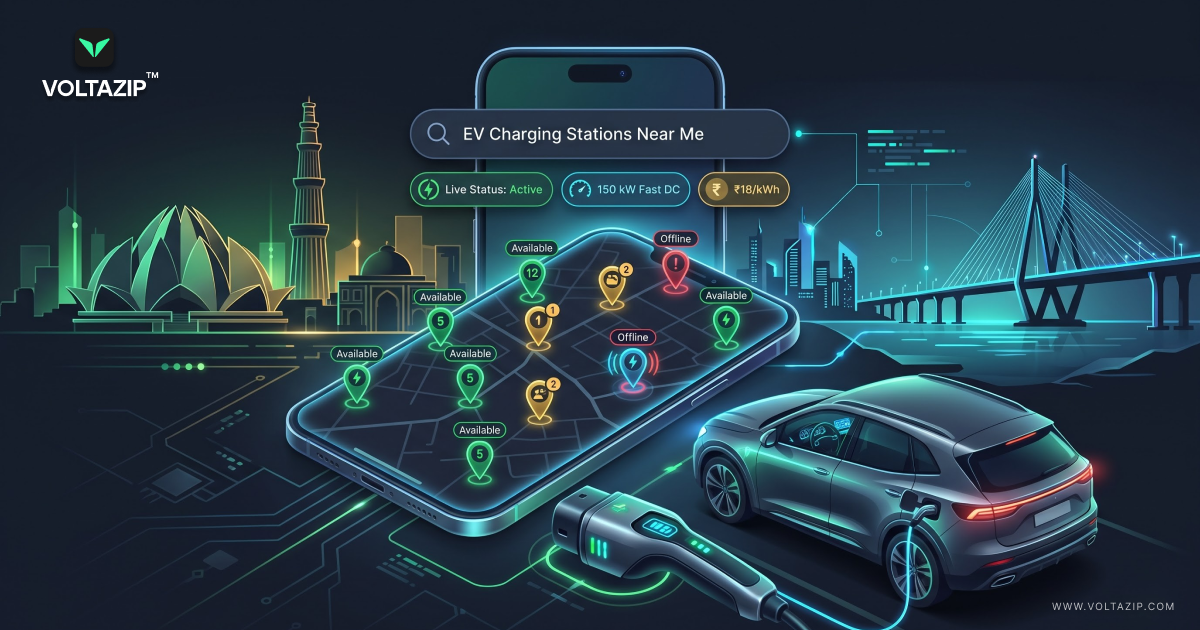
Search queries for “EV charging stations near me” have surged over 120% across India, driven by rapid urban adoption in metros like Delhi, Mumbai, Bengaluru, and Hyderabad.
Finding a plug point on a map is no longer the real challenge. The real frustration for Indian EV owners is pulling up to a charger only to discover it’s occupied, restricted to private fleet vehicles, offline due to grid failure, or requiring a brand-new app download just to start a session.
This comprehensive guide breaks down how to locate reliable public chargers in every major Indian city, evaluate real-time station health, navigate highway dead zones, and avoid common charging traps.
The 3 Ways to Find EV Charging Stations in India
When you are running low on range, you have three primary lookup tools available:
1. Multi-Network Aggregator Apps (The Best Choice)
Rather than maintaining 10+ distinct operator apps, multi-network aggregators pool live API feeds from multiple Charge Point Operators (CPOs) into a unified live map.
- Why it works: Shows real-time dynamic status (Available, Busy, Offline) across different networks.
- Best for: Everyday city driving, multi-brand comparisons, and finding live pricing transparently before driving over.
2. Built-in In-Car Navigation & Google Maps
Google Maps and built-in vehicle infotainment systems (like Tata ZConnect, Mahindra XUV400 connectivity, or Ather Grid in-dash maps) offer convenience for quick routing.
- Why it works: Hands-free voice searches while driving (
"Find EV chargers along my route"). - The drawback: Maps data relies heavily on user-contributed pin drops. They frequently list broken chargers, missing plug speeds, or private residential wall boxes as public fast chargers.
3. Individual Operator Apps (CPO Native Apps)
Networks like Tata Power EZ Charge, Jio-bp Pulse, Statiq, ChargeZone, Zeon Charging, and Glida operate proprietary apps.
- Why it works: Direct hardware control to initiate charging sessions or unlock specific connector guns.
- The drawback: Single-network bias. If a Tata Power charger is down, the Tata app won’t display the functional Jio-bp or Statiq charger 200 metres away.
City-by-City EV Charging Landscape in 2026
Public charging density varies significantly by metro region and state DISCOM support:
| City / Region | Public Density | Major CPO Networks Active | Average Pricing (Fast DC) |
|---|---|---|---|
| Delhi-NCR | Very High | Tata Power, Statiq, BluSmart, Glida | ₹16–₹22 / kWh |
| Mumbai Metro | High | Jio-bp, Tata Power, ChargeZone, Adani Total | ₹18–₹24 / kWh |
| Bengaluru | Very High | Ather Grid, Bescom Kazam, Statiq, Jio-bp | ₹18–₹23 / kWh |
| Chennai | Medium-High | Zeon Charging, ChargeZone, Relux, Tata Power | ₹19–₹24 / kWh |
| Hyderabad | High | Statiq, Kazam, Tata Power, Jio-bp | ₹18–₹22 / kWh |
| State Highways | Variable | Zeon, ChargeZone, Tata Power, Jio-bp | ₹20–₹26 / kWh |
What to Do When a Charger is Offline or Blocked
Few things are more stressful than pulling up to a fast charger at 8% State of Charge (SoC) and encountering a red fault light. Follow this diagnostic checklist:
- Check for Emergency Stop Triggers: Frequently, a previous user hits the red physically latching Emergency Stop button on DC cabinets. Twist the button clockwise to reset the contactor.
- Perform an App-Level Hard Reset: If the gun won’t communicate with the vehicle’s CCS2 port, initiate the plug lock sequence directly from the operator’s app before plugging in the cable.
- Verify Fleet Restrictions: Many metro fast chargers located inside commercial parking complexes are reserved exclusively for commercial EV fleets (e.g., Uber/BluSmart cabs) during peak hours. Always filter for “Public Access” on aggregator maps.
- Inspect Connector Dust Covers & Pins: Debris or bent pins inside CCS2/Type-2 gun heads prevent the safety handshake between the charger and your vehicle.
Essential Rules for Highway Long-Distance Trips
Planning a inter-city road trip across Indian national highways requires a slightly different approach than city commuting:
- The 20% SoC Buffer Rule: Never plan highway charging stops at 5% SoC. Always target arrival at a fast charger with a minimum 20% safety margin in case the primary station is down or occupied.
- Filter by Dual-Gun DC Fast Chargers: Single-gun 25 kW or 30 kW chargers create long queue bottlenecks. Target dual-gun 60 kW, 120 kW, or 150 kW DC fast chargers at highway food courts (e.g., McDonald’s, Starbucks, or highway dhabas) where power-sharing is available.
- Carry a Portable 3.3 kW Trickle Cable: If stuck in a remote area without DC infrastructure, any standard 16A industrial socket (used for heavy appliances) at a hotel or restaurant can deliver ~10–15 km of range per hour of charging.
Why Network Price Transparency Matters
Public DC fast charger pricing in India ranges from ₹18/kWh to over ₹26/kWh, excluding local taxes and parking fees. Across a 400 km highway trip, price variance between operators on the exact same corridor can add ₹500–₹800 to your trip bill.
Having visibility over live availability, real-world connector speed, and precise unit pricing before navigating saves time and cuts running costs.
Never get stranded at a broken plug again. Download Voltazip on Google Play to aggregate every CPO network across India, check real-time charger status, compare unit prices, and route plan with confidence.